NYSCEF Surrogate Court makes electronic filing simple for probate cases in New York. This system allows attorneys and authorized users to submit wills, estate petitions, and guardianship documents online quickly. NYSCEF provides a centralized platform where probate records are stored for easy review and case tracking. Users can search for cases, check document status, and monitor updates without visiting the courthouse. The platform supports both new filings and ongoing estate matters efficiently. By using NYSCEF, Surrogate Court processes become faster and more organized for all parties involved.
NYSCEF Surrogate Court also helps manage estates and probate records securely. Executors, lawyers, and interested parties can view filed wills and legal documents anytime online. The system tracks hearings, decisions, and filings in one place for convenience. Users can access detailed case information, reducing paperwork and delays. With this eFiling tool, Surrogate Court workflows for estates and guardianships are streamlined. NYSCEF ensures transparency and keeps probate case handling professional and accessible.
What is NYSCEF Surrogate Court?
NYSCEF Surrogate Court refers to the use of the NY State electronic filing system for cases handled in Surrogate’s Court. It supports digital submission, storage, and tracking of probate and estate-related documents within New York courts.
What NYSCEF Surrogate Court Means
NYSCEF is an electronic filing system used across the New York State Unified Court System. Within Surrogate’s Court, it functions as a digital case management platform for probate and estate matters.
The term nyscef surrogate court or nyscef surrogate’s court refers to this specific use of NYSCEF for handling filings related to wills, estates, and inheritance cases. It replaces paper-based processes with structured online submissions and record storage.
Role in Estate and Probate Cases
Surrogate’s Court focuses on legal issues involving deceased persons’ estates. NYSCEF plays a key role in managing these cases by enabling:
- Filing of probate petitions to validate wills
- Submission of documents for estate administration
- Handling requests for letters testamentary or letters of administration
- Uploading affidavits, waivers, and supporting evidence
- Tracking hearings, decisions, and docket entries
Difference From Civil and Criminal NYSCEF Cases
NYSCEF serves multiple court divisions, but Surrogate Court filings differ from civil and criminal matters in purpose and structure.
| Area | Surrogate Court (NYSCEF) | Civil/Criminal NYSCEF |
|---|---|---|
| Case Type | Probate, estates, wills | Lawsuits, disputes, criminal charges |
| Purpose | Estate distribution and administration | Resolving disputes or enforcing law |
| Parties | Executors, beneficiaries, heirs | Plaintiffs, defendants, prosecutors |
| Documents | Wills, petitions, affidavits | Complaints, motions, evidence filings |
| Focus | Asset distribution and legal authority | Liability, rights, or criminal responsibility |
How to Search NYSCEF Surrogate Court Cases
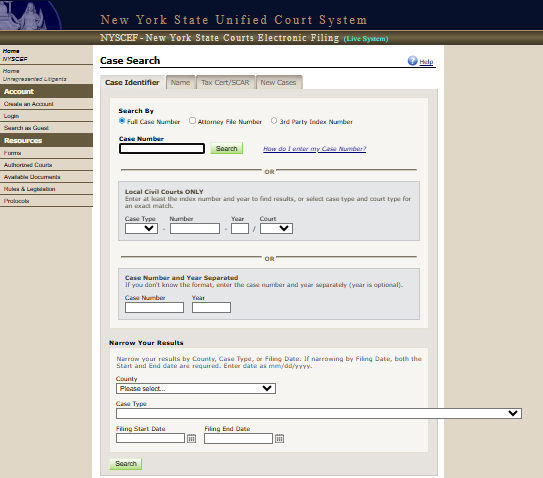
Users can search Surrogate Court cases in New York through the official NYSCEF public access system. The process allows users to perform a surrogate court case search NY or NY probate records search using name, case number, or other filters.
Official Website
https://iapps.courts.state.ny.us/nyscef/CaseSearch
This is the official NYSCEF case search portal used for Surrogate Court and other NY courts.
Steps to Process to Search Cases
Go to the link above in a web browser. This is the public access system provided by the New York State Unified Court System through NYSCEF.
Select Search Type
On the search page, users will see options to search by:
- Party name
- Case index number
- Attorney name
- Or other available filters
Choose the method that matches the information you have.
Search by Name
If you do not have a case number:
- Enter the last name or full name of the person involved
- This can be the decedent, executor, or party name
- Click search to view matching results
The system will show multiple cases if names are common, so review details like county and filing date.
Search by Case Index Number
If you already have a case index number search:
- Enter the exact index number in the search field
- Submit the query
- The system will directly display the matching Surrogate Court case
This is the fastest and most accurate method.
Filter and Refine Results
After results appear:
- Use filters such as county or case type
- Sort or scan through results to find the correct probate case
- Click on a case to open detailed information
View Case Details and Documents
Once a case is selected, users can:
- View docket entries
- Check case status
- See filed documents (if publicly available)
- Review probate court records and filings
Surrogate Court in New York
Surrogate Court in New York handles legal matters tied to estates, wills, and guardianships after a person passes away. It manages probate proceedings and oversees the fair distribution of assets through court-supervised processes.
Jurisdiction of Surrogate Court in NY
Surrogate’s Court has jurisdiction over matters involving estate administration, wills and trusts, and certain guardianship cases. In the context of surrogate court NY, this court serves as the main venue for resolving inheritance-related legal issues.
Key areas under its jurisdiction include:
- Probate of wills to confirm validity
- Estate administration when no will exists
- Appointment of legal representatives for estates
- Oversight of inheritance cases and asset distribution
- Guardianship for minors or incapacitated individuals
Role of Executors and Administrators
The Surrogate Court appoints individuals to manage estates:
- Executor: Named in a valid will to carry out the deceased’s wishes
- Administrator: Appointed by the court when no will exists
Their responsibilities include:
- Collecting and managing estate assets
- Paying debts, taxes, and obligations
- Distributing remaining assets to heirs or beneficiaries
- Filing required documents with the court
Executors and administrators must follow court procedures and may be required to submit periodic reports. The court supervises their actions to maintain transparency and fairness.
Types of Cases Handled in Surrogate Court
Surrogate Court NY handles a variety of inheritance and estate-related matters, including:
Probate Proceedings
- Validation of wills
- Determining rightful beneficiaries
Estate Administration
- Managing estates without a will (intestate cases)
- Appointment of administrators
Guardianship Cases
- Appointment of guardians for minors or incapacitated individuals
- Oversight of personal and financial care decisions
Trust Matters
- Disputes or administration involving trusts
- Distribution of trust assets
Ancillary Proceedings
- Cases involving out-of-state estates with assets in New York
- Supplemental filings related to existing estate cases
Types of Cases Filed in NYSCEF Surrogate Court
NYSCEF Surrogate Court handles a range of probate and estate matters through electronic filing. These cases involve wills, estates, and inheritance-related issues recorded as official probate cases and estate cases NYSCEF tracks digitally.
Probate Proceedings
Probate proceedings begin when a will must be validated after a person’s death. The court reviews the will to confirm its authenticity and appoints an executor to manage the estate.
In these probate cases:
- The will is submitted to the court
- Beneficiaries are identified
- The executor receives authority to act
- Assets are distributed according to the will
Surrogate’s Court oversees this process to confirm the document meets legal requirements. These filings become part of official probate court records and remain accessible through NYSCEF.
Administration Proceedings
Administration proceedings apply when a person dies without a valid will. These cases involve the distribution of a decedent estate under state law.
Key features include:
- The court appoints an administrator
- Assets are distributed to legal heirs
- The process follows intestacy laws in New York
- Required documents are filed through electronic filing systems
In estate cases NYSCEF manages, administration proceedings help ensure fair handling of assets when no written instructions exist. These cases often involve detailed documentation of assets, debts, and heirs.
Small Estate Filings
Small estate filings apply when the total value of the estate falls below a threshold set by New York law. These cases are typically simpler and require fewer court steps.
Common elements include:
- Streamlined paperwork
- Faster processing times
- Limited asset distribution procedures
- Reduced filing complexity
Small estate processes still follow Surrogate Court rules, but they are designed to handle modest estates efficiently through NYSCEF.
Contested Wills and Inheritance Disputes
Contested wills arise when parties challenge the validity of a will. These cases often involve inheritance disputes between family members, beneficiaries, or interested parties.
Typical reasons for disputes include:
- Questions about the will’s authenticity
- Claims of undue influence or fraud
- Concerns about mental capacity of the decedent
- Conflicts over asset distribution
In these situations, Surrogate Court examines evidence, hears arguments, and determines whether the will stands or is invalid. Trust administration disputes may also fall under this category when disagreements arise over how assets in a trust are managed or distributed.
NYSCEF Surrogate Court Filing Process
NYSCEF Surrogate Court filing allows users to submit estate and probate documents through an online system. The process supports electronic submission of filings tied to surrogate court filing NYSCEF cases using a structured digital workflow.
NYSCEF connects with the Surrogate’s Court to manage filings, review submissions, and track case activity through a centralized platform.
Steps to Filing Process
The NY surrogate court e filing process follows a clear sequence:
Create or Log Into NYSCEF Account
Users must register and sign into the NYSCEF system before submitting any documents.
official NYSCEF account creation page: https://iapps.courts.state.ny.us/nyscef/CreateAccount
You can use that page to:
- Select the appropriate account type (attorney, pro se, etc.)
- Start the registration process
- Create your NYSCEF login credentials
Select the Case Type
Choose the appropriate Surrogate Court matter such as probate, administration, or guardianship.
Enter Case Information
Provide key details, including:
- Party names
- Case category
- Filing type
- Court location
If the case already exists, the case index number is used to link new filings.
Upload Documents
Users complete the document upload step by attaching required forms such as petitions, wills, affidavits, and supporting evidence.
Electronic Submission
After verifying details, the filing is submitted through the system. Confirmation is generated once the submission is successful.
Payment of Filing Fees
Most filings require court fees. Payments are typically processed online at the time of submission. Fee amounts vary based on case type and estate value.
Required Documents for Filing
Common documents submitted in Surrogate Court filings include:
- Last Will and Testament (for probate cases)
- Petition for probate or administration
- Death certificate
- Affidavits and waivers
- Inventory of estate assets
- Letters testamentary or administration forms
Filing Fees
Filing fees depend on the type and size of the estate. In general:
- Probate and administration cases involve standard filing fees
- Larger estates may incur higher fees
- Additional motions or petitions may require separate payments
The NYSCEF system calculates or displays applicable fees during submission in many cases.
Clerk Review and Approval Process
After submission, the Surrogate Court clerk reviews the filing. This step includes:
- Verifying document completeness
- Checking formatting and compliance
- Confirming payment of fees
- Validating case details and index number
NYSCEF Probate Records and Estate Case Access
NYSCEF provides structured access to probate court records and estate records NY users often need for legal, research, or administrative purposes. Through its electronic filing and retrieval system, users can review filed documents tied to Surrogate Court matters in a centralized digital format.
Accessing Probate Court Records
Probate court records include documents submitted during estate administration and probate proceedings. These records are part of public records, although access may vary depending on case type and user permissions.
Users can retrieve information such as:
- Filed petitions and motions
- Wills and supporting affidavits
- Court orders and rulings
- Docket entries and case activity logs
This document retrieval process allows attorneys, executors, and interested parties to track estate-related matters without physical file requests.
Estate Records in NYSCEF
Estate records NY filings include all documentation associated with a decedent’s estate. These records typically cover:
- Asset inventories
- Debts and liabilities
- Distribution plans
- Letters testamentary or administration
- Correspondence filed with the court
These records support transparency in estate administration and provide a clear history of court filings throughout the case lifecycle.
Public Records and Case Transparency
Many probate and estate filings are considered public records. Through NYSCEF, users can:
- Search case details using names or index numbers
- View available filings tied to a case
- Track updates and docket activity
- Access documents based on case permissions
Wills and Trusts Filing Through NYSCEF
Wills and trusts filing through NYSCEF involves submitting legal documents that define how assets are managed and distributed after a person’s death. These filings are part of the NY probate filing process handled by Surrogate Court.
NYSCEF supports digital submission of these documents within the Surrogate Court system, helping streamline fiduciary responsibilities and case processing.
Last Will Submission Process
The last will submission is a key step in probate cases. When a person passes away, the will must be filed with the court for validation.
Common steps include:
- Submitting the original will to the court
- Filing a probate petition
- Providing a death certificate
- Including supporting affidavits from witnesses
- Requesting appointment of an executor
Once accepted, the court reviews the will to confirm its validity and begins the probate process.
Trust Documents Filing
Trust-related filings involve legal arrangements where assets are managed by a trustee for beneficiaries. In NYSCEF, trust documents may include:
- Trust agreements
- Amendments to existing trusts
- Trustee appointment or resignation forms
- Financial reports related to trust assets
These documents help the court oversee trust administration when disputes arise or when court involvement is required.
Fiduciary Filing Responsibilities
A fiduciary—such as an executor, administrator, or trustee—has legal duties when filing through NYSCEF. These responsibilities include:
- Submitting accurate and complete documents
- Managing estate or trust assets responsibly
- Filing periodic reports when required
- Communicating updates to the court and beneficiaries
Estate Administration Process in NY
Estate administration in New York involves managing and settling a decedent’s estate through Surrogate Court using electronic systems like NYSCEF. From a digital filing perspective, the process supports executor filing, document submission, and case tracking through an organized online workflow.
NYSCEF works alongside the Surrogate’s Court to handle estate matters such as probate, asset distribution, and court-supervised administration.
Overview of Estate Administration
Estate administration begins after a person’s death and involves identifying, collecting, and distributing assets. When a valid will exists, an executor is named. If not, the court appoints an administrator.
Key goals of estate administration include:
- Managing assets of the decedent estate
- Paying debts, taxes, and obligations
- Distributing remaining assets to beneficiaries or heirs
- Completing required court filings through NYSCEF
All actions are documented through electronic filing, creating a record of estate activity within probate court records.
Executor Filing and Appointment
Executor filing starts when a named executor submits a probate petition to the Surrogate Court. The court reviews the will and, if approved, issues letters testamentary.
Steps typically include:
- Filing a probate petition with the will
- Submitting supporting documents such as a death certificate
- Notifying interested parties
- Court review and approval
- Issuance of letters testamentary
Fiduciary Duties in Estate Administration
Executors and administrators act as fiduciaries. This means they must manage the estate responsibly and in the best interest of beneficiaries.
Common fiduciary duties include:
- Collecting and safeguarding estate assets
- Maintaining accurate financial records
- Paying outstanding debts and taxes
- Avoiding conflicts of interest
- Distributing assets according to the will or state law
Fiduciaries must also comply with court requirements and may need to submit reports through NYSCEF during the administration process.
Estate Settlement Through Digital Filing
Estate settlement refers to the final stage of administration when assets are distributed and the estate is closed. Through digital filing, the process becomes more structured and traceable.
Typical steps in estate settlement include:
- Final accounting of estate assets
- Payment of remaining obligations
- Distribution to beneficiaries
- Filing closing documents with the court
- Obtaining court approval to close the estate
FAQs – NYSCEF Surrogate Court & Probate Cases
This section answers common questions about NYSCEF Surrogate Court, Probate Cases, and related lookup methods in New York.
How do I search NYSCEF surrogate court cases?
Users can perform a surrogate court case search NY through the official NYSCEF public portal. The process involves entering a name, case index number, or other case details into the search system.
Steps include:
- Visit the official NYSCEF case search page
- Enter the party name or case index number
- Apply filters such as county or case type
- Review results and select the relevant probate case
- View available docket entries and filings
Are probate records public in NY?
Many probate court records in New York are considered public records. These may include filed wills, petitions, and docket information from Surrogate Court cases.
However:
- Some documents may be restricted
- Sensitive information may be redacted
- Access may depend on user permissions or case type
Through the NYSCEF system, users can view available estate records NY courts maintain, though full access is not always guaranteed for every document.
Can I file a will online in NY?
Yes, wills can be submitted electronically through NYSCEF as part of the NY probate filing process, but only by authorized users such as attorneys or registered filers.
The process includes:
- Uploading the last will and testament
- Submitting a probate petition
- Including supporting documents like a death certificate
- Completing electronic submission through the system
This process is part of fiduciary filing within Surrogate Court, managed by the Surrogate’s Court.
What is a surrogate court case number?
A surrogate court case number, also known as a case index number, is a unique identifier assigned to each estate or probate case.
Key points:
- It is used to track and manage court filings
- It allows precise search within NYSCEF
- It helps users locate specific probate court records quickly
- It is required for accurate document retrieval
Using this number in a case index number search returns exact matches, reducing confusion caused by similar names.
Who can access estate records?
Access to estate records depends on the type of document and user role.
Typically, the following groups may access records:
- Attorneys handling the case
- Executors and administrators
- Interested parties such as beneficiaries
- Members of the public for limited, non-restricted filings