NYSCEF case search provides a simple way to review New York court records through an online system. The New York State Courts Electronic Filing System stores case details, filings, and updates in one centralized platform. Users enter a case number, party name, or attorney name to retrieve relevant results quickly. The system supports civil matters across participating courts in New York. It presents structured case information that helps users track progress and filings. As a result, nyscef search becomes a practical option for anyone checking case status online.
NYSCEF case search also supports efficient online case lookup without requiring courthouse visits. Users can review court records such as motions, orders, and hearing schedules in one place. The system organizes data in a clear format, which makes nyscef lookup straightforward for both legal professionals and the public. Search results typically include case identifiers, party listings, and document history. This helps users confirm case details and monitor updates over time. With consistent record availability, New York court records remain easier to review through the NYSCEF platform.
What is NYSCEF?
The New York State Courts Electronic Filing System is an electronic court filing platform used for managing civil case documents in New York. It serves as the official NY e-filing system that allows parties to submit, store, and review legal filings online.
NYSCEF Filing System
The nyscef filing system is a centralized digital platform used by the New York court system to handle civil case documents electronically. It replaces traditional paper-based filing in many cases and supports a more organized case management system for courts and legal professionals.
Through this system, users can:
- Submit legal documents electronically
- View filed documents through nyscef document access
- Track case activity in real time
- Maintain organized digital records for civil cases
Purpose of NYSCEF
The primary purpose of NYSCEF is to streamline court operations and improve document handling. By shifting filings online, the system reduces delays associated with manual paperwork and physical storage.
Key purposes include:
- Improving speed of document submission and review
- Centralizing case records for easier retrieval
- Supporting consistent filing standards across courts
- Reducing administrative workload for court staff
In addition, the system helps maintain accurate and up-to-date records, which supports better communication between parties involved in a case.
Who Uses the NYSCEF System
The NYSCEF platform is used by multiple groups involved in the legal process. Each group interacts with the system in different ways based on their role.
Primary users include:
- Lawyers and law firms
Attorneys regularly use NYSCEF to file motions, upload exhibits, and monitor case progress. - Court clerks and judges
Court staff rely on the system to review filings, manage records, and update case information. - Self-represented litigants
Individuals representing themselves may use the system in certain cases where e-filing is permitted. - Public users
Members of the public can review limited case information and, in some instances, view documents depending on access permissions.
How to Search NYSCEF Cases
A nyscef case search allows users to find New York court records through a structured online system. The nyscef search tool works by matching user input with indexed court data stored in the official electronic filing system. By following a clear process, users can complete a nyscef docket search, review case details, and view available filings.
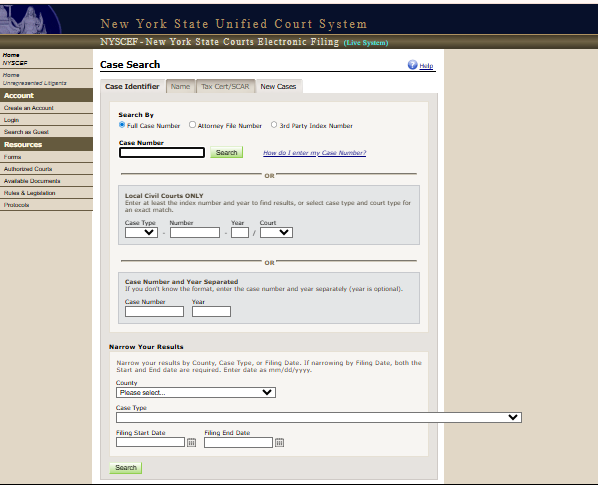
Access NYSCEF Search Portal
Start by visiting the official NYSCEF case search portal:
https://iapps.courts.state.ny.us/nyscef/CaseSearch
This portal belongs to the New York State Courts Electronic Filing System and serves as the main entry point for all nyscef case search activities.
After opening the page:
- The search interface loads with multiple input options
- No advanced setup is required for basic searches
- The system connects directly to the court database used for civil case records
Choose Search Method
The next step is selecting a search method. The NYSCEF system supports multiple ways to locate a case, depending on what details the user has.
Common search methods include:
- Index Number Search – Used when the exact case number is known
- Party Name Search – Enter plaintiff or defendant names
- Attorney Search – Search using a lawyer or law firm name
- Case Status Lookup – Identify active, pending, or closed cases
Choosing the correct method improves the accuracy of the nyscef search results and reduces irrelevant matches. Each method connects to the same indexed records but filters them differently.
Enter Case Details
After selecting a search type, users enter the required details into the search fields.
Examples of inputs:
- Full or partial party names
- Index or docket number
- Attorney name or firm
- Keywords related to the case
The system uses case indexing to match the input against stored records. During a nyscef case lookup, even partial names can return multiple results, which users can review and refine.
Filter Results
Once the search results appear, users can refine them using available filters. This step helps narrow down results during a nyscef docket search, especially when multiple cases share similar names.
Common filtering options include:
- Court location or county
- Filing date range
- Case type (civil, commercial, etc.)
- Case status lookup (active, closed, archived)
Users should compare:
- Index numbers
- Party names
- Court details
View Case Documents
After selecting a case, the system displays the docket sheet and related filings. This is the final step in completing a nyscef case search.
Inside the case page, users can view:
- Docket entries showing chronological case activity
- Filed documents such as motions, complaints, and responses
- Court orders and rulings
- Hearing dates and updates
How NYSCEF Case Search Works
The NYSCEF case search uses a structured digital system to help users perform a nyscef case lookup across a centralized court database. It connects user input with indexed records stored in the court’s file retrieval system, returning relevant case details within seconds.
Case Indexing and Search Matching
The system relies on case indexing, where each case is assigned a unique identifier and stored with associated metadata. This includes party names, filing dates, and court locations. When a user enters search details such as a name or index number, the system matches that input against indexed records. The court database then returns a list of cases that match the criteria.
Common search inputs include:
- Party name (plaintiff or defendant)
- Case index or docket number
- Attorney name
- Filing date range
Court Docket Lookup Process
A court docket lookup shows the chronological record of filings and actions in a case. After selecting a case from the search results, users can view the docket sheet, which outlines key events.
Typical docket information includes:
- Filings submitted by each party
- Motions, orders, and rulings
- Hearing schedules and outcomes
- Status updates on the case
File Retrieval System and Document Access
The NYSCEF platform functions as a file retrieval system, where documents are stored electronically and linked to each case record. Once a case is selected, users can view available documents through nyscef case lookup results.
Documents may include:
- Complaints and responses
- Motions and affidavits
- Exhibits and supporting evidence
- Court orders and judgments
NYSCEF Guest Search (Search Without Login)
A nyscef guest search allows users to perform an anonymous case lookup without creating an account or signing in. Through this nyscef search as guest option, users can view basic public access records and locate case information directly from the official system.
The New York State Courts Electronic Filing System provides limited public access so that anyone can review certain civil case details without login credentials. This makes it easier for users to perform a quick check of court records when only general information is needed.
What Is NYSCEF Guest Search?
The guest search feature is a simplified version of the full system. It allows users to search for cases without authentication while still connecting to the official court database.
Through this method, users can:
- Perform a nyscef search as guest using names or index numbers
- View selected public access records
- Check basic case details such as party names and docket entries
- Conduct a quick case status lookup without logging in
This option is especially useful for individuals who need quick information without managing an account.
What Can Be Viewed Without Login?
A nyscef guest search provides limited but useful information. While full document access may require permissions, users can still see key case data.
Typically available without login:
- Case title and index number
- Party names involved in the case
- Court location and jurisdiction
- Docket summaries showing case activity
- Basic status updates (active, closed, pending)
Some documents may remain restricted depending on court rules or case type. However, the available data is often sufficient for general research and verification.
When to Use Guest Search
Users may prefer anonymous case lookup when:
- They only need quick case details
- They do not have or want to create an account
- They are checking public records for reference
- They are performing an initial nyscef case search before deeper review
Types of Cases Available in NYSCEF
The NYSCEF system provides access to a wide range of civil case information across New York courts. Through a nyscef case lookup, users can review records related to different types of civil litigation, depending on the court and case category. The New York State Courts Electronic Filing System primarily covers cases filed in the civil court system NY, including Supreme Court matters and specialized divisions that handle complex disputes.
Supreme Court Cases in NY
Many records available through NYSCEF come from Supreme Court cases NY, which handle a broad range of civil matters. Despite the name, the Supreme Court in New York is a trial-level court, not the highest appellate court.
These cases may include:
- Personal injury claims
- Contract disputes
- Property and real estate issues
- Family-related civil matters (in some jurisdictions)
Commercial Division Cases
The commercial division cases focus on business-related disputes. These cases involve complex legal and financial issues between companies or individuals engaged in commercial activities. These cases often include detailed filings and motions, making NYSCEF a useful tool for reviewing civil litigation records in business contexts.
Common examples include:
- Business contract disputes
- Shareholder or partnership conflicts
- Intellectual property disputes
- Corporate governance issues
Other Civil Case Types
In addition to Supreme Court and commercial matters, NYSCEF also includes other categories of civil cases depending on jurisdiction and filing rules. Each case type follows specific filing requirements within the NY e-filing system, and records are stored in the same centralized database.
Examples include:
- General civil litigation records involving individuals or organizations
- Real estate and landlord-tenant disputes (in applicable courts)
- Professional liability cases
- Financial and insurance-related disputes
Case Coverage in NYSCEF
Through a nyscef case lookup, users can expect to find:
- Case index numbers tied to each filing
- Party names and attorney details
- Docket entries showing case progress
- Filed documents and court orders
NYSCEF vs eCourts
Both NYSCEF and the New York judiciary tools serve different roles in a NY court case search. The official New York State Courts Electronic Filing System is mainly used for electronic filing and document management, while eCourts focuses on case tracking and status updates.
Official NYSCEF portal for case search:
https://iapps.courts.state.ny.us/nyscef/CaseSearch
Key Difference Between Systems
The difference between systems becomes clear when comparing their core functions:
| Feature | NYSCEF | eCourts |
|---|---|---|
| Purpose | Electronic filing system | Case tracking system |
| Function | Filing documents and managing records | Viewing case status and updates |
| Document Access | Available with permissions | Limited summaries |
| User Type | Attorneys, litigants, court staff | Public users |
| Role in NY Judiciary Tools | Case filing and storage | Case information lookup |
Case Tracking vs Filing
- NYSCEF focuses on filing documents, storing case records, and managing court submissions.
- eCourts focuses on case tracking, hearing dates, and general updates.
This distinction helps users choose the right tool depending on whether they need document submission or a simple case status lookup.
When to Use Each System
- Use NYSCEF when:
- Filing legal documents
- Viewing detailed docket entries
- Checking filings in civil litigation records
- Use eCourts when:
- Performing a quick NY court case search
- Checking case status
- Viewing hearing schedules
Together, both systems form part of the broader NY judiciary tools used for managing and tracking civil cases across courts.
Search Methods
A case database search in NYSCEF relies on structured inputs that connect to indexed court records. A court docket lookup allows users to view the chronological record of filings tied to a case.
Official NYSCEF case search page:
https://iapps.courts.state.ny.us/nyscef/CaseSearch
Index Number
The index number is the most direct way to locate a case.
- Each case is assigned a unique identifier
- Entering it returns a single, exact result
- Commonly used by legal professionals for precise lookup
Party Name
A party name search uses the names of plaintiffs or defendants.
- Users can enter full or partial names
- Results may include multiple matching cases
- Useful for general public searches
This method is widely used when the index number is not available.
Filer Name / Attorney Details
Searching by filer name or attorney details helps locate cases connected to a specific legal representative.
- Enter the attorney or law firm name
- Results display cases where the attorney is involved
- Useful for reviewing representation history
Case Database Structure
The NYSCEF system organizes data using structured fields such as:
- Index number for unique case identification
- Party name for case association
- Attorney details for representation tracking
- Filing dates and court location
Common Issues in NYSCEF Case Search
Users may sometimes face problems during a nyscef search not working situation or when a case not found NYSCEF result appears. These issues usually relate to input errors, system limitations, or timing of record updates within the court database.
The New York State Courts Electronic Filing System relies on accurate indexing and data entry, so small mistakes or delays can affect search results.
Incorrect Case Number
One of the most common issues is entering an incorrect case number.
- Even a single wrong digit can prevent results from appearing
- Index numbers must match the exact format used by the court
- Missing prefixes or extra characters may cause no match
Users should double-check the index number before retrying the nyscef case search.
Spelling Errors in Names
Errors in party name search are another frequent reason for missing results.
- Misspelled names reduce match accuracy
- Variations in abbreviations or initials may affect results
- Partial names may return multiple records or no match
Using correct spelling improves the chances of finding the right case during a nyscef lookup.
Missing or Restricted Records
Some records may not appear due to limitations in public access.
- Certain cases may have restricted visibility
- Older or sealed records may not be available
- Some filings require login or permissions
This can lead to a case not found NYSCEF message even when the case exists in the system.
Delayed Updates in the System
The NYSCEF platform may experience delayed updates between filing and public display.
- Recently filed documents may take time to appear
- Court processing times can affect record availability
- Updates may not reflect instantly in search results
Tips to Resolve Common Issues
To improve results:
- Recheck index numbers carefully
- Try alternative name spellings
- Use partial names for broader matches
- Verify court location or county if known
- Retry the search after some time if records are delayed
Understanding these issues helps users handle common errors during a nyscef search not working scenario and improves overall search accuracy.
Tips for Accurate NY Court Case Lookup
Achieving an accurate case search NY result requires careful input and smart use of available filters. Applying simple nyscef lookup tips can significantly improve search precision and reduce irrelevant results.
Refine Search Filters
Use available filters to narrow down results during a court docket lookup.
- Select the correct court or county
- Apply filing date ranges if known
- Use case type filters when available
Maintain Spelling Accuracy
Accurate spelling plays a key role in successful searches.
- Enter full and correctly spelled party names
- Avoid unnecessary abbreviations when possible
- Cross-check attorney names for exact matches
Even small spelling differences can affect results in the case database search.
Use Date Filters When Available
Date filters help reduce large result sets.
- Enter approximate filing dates if known
- Narrow results to a specific time range
- Combine date filters with name or index searches
FAQs – NYSCEF Case Search
This section answers common questions about NYSCEF Case Search, attorney verification, and related lookup methods in New York.
What is NYSCEF case search?
A nyscef case search is an online method used to find New York civil court records through the New York State Courts Electronic Filing System. It allows users to locate cases using details such as party names, index numbers, or attorney names.
This system connects to the court database and displays case summaries, docket entries, and available filings. Users rely on it for NY court case search needs, including reviewing civil litigation records and tracking case progress.
Is NYSCEF free?
Yes, basic nyscef search functions are free for public use. Users can:
- Perform case lookups
- View limited case details
- Access certain public records
However, some document access features may require login credentials or permissions depending on the case type and user role.
Can I search without login?
Yes, users can perform a nyscef search as guest without creating an account. This allows access to:
- Public case information
- Party names and index numbers
- Docket summaries
This anonymous case lookup is useful for quick checks. However, full document access or filing features may require registration and authorized access.
Why can’t I find my case?
There are several reasons why a case not found NYSCEF result may appear:
- Incorrect case number or spelling errors in party names
- Case not yet uploaded or delayed updates in the system
- Restricted or sealed records not visible to the public
- Search filters too narrow or incomplete inputs
Users should retry with corrected details, alternative spellings, or broader search criteria when facing a nyscef search not working issue.
What is the difference between docket and case file?
- Docket:
A docket is a chronological record of all actions taken in a case. It shows filings, motions, hearings, and updates in sequence. - Case file:
A case file contains the actual documents submitted, such as complaints, motions, exhibits, and court orders.
In a court docket lookup, users view the timeline of events, while the case file provides the detailed documents associated with each docket entry.
How to track case status?
Users can track case status through the NYSCEF system by:
- Performing a nyscef case search using index number or party name
- Opening the relevant case from the results
- Reviewing the docket page for status updates
- Checking labels such as active, pending, or closed